
In the realm of modern manufacturing, designing High-Performance Components capable of withstanding extreme environments is a primary durability challenge for engineers and procurement teams alike.When selecting industrial hardware, it is essential to consider the operating environment and choose the most suitable material accordingly.
For example, agricultural machinery is often exposed to long hours of sunlight, so UV-resistant materials are required to enhance durability. In other cases, high electrical insulation or flame resistance may be critical, which makes material selection even more important.
At Intercraft (ITC), we frequently work with customers who have these types of industrial hardware requirements. We typically recommend either engineering plastics or phenolic resin (Bakelite), depending on the application. However, these two materials have very different characteristics.
Characteristics and Benefits of Engineering Plastics in Industrial Hardware
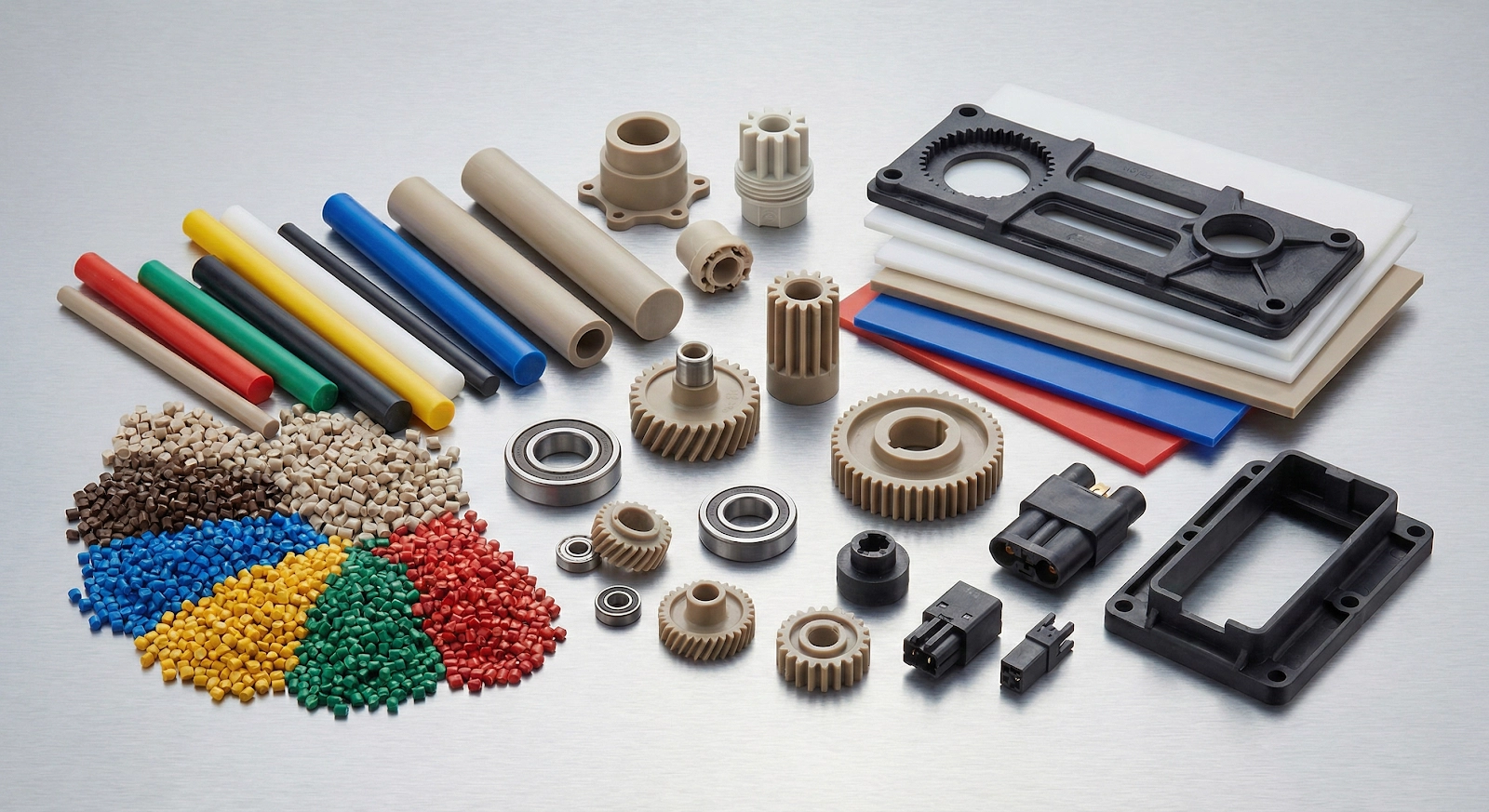
Engineering plastics are thermoplastic materials, meaning they are reversible—softening when heated and allowing for repeated processing.
Their hardness and heat resistance are generally lower than those of phenolic resin (many commonly used plastics have heat resistance below 100°C, or around 100–140°C), and some offer a degree of flexibility.
They provide a wide variety of appearances, usually with glossy surfaces, lighter weight, and many material options.Post-processing is relatively simple, typically requiring only the trimming of gate marks or flash. To maximize the performance of these materials, professional Mold/Tooling Develop is crucial, as precise mold design directly impacts the structural integrity, dimensional accuracy, and aesthetic finish of the final industrial hardware.
Phenolic Resin (Bakelite): High Heat Resistance and Insulation
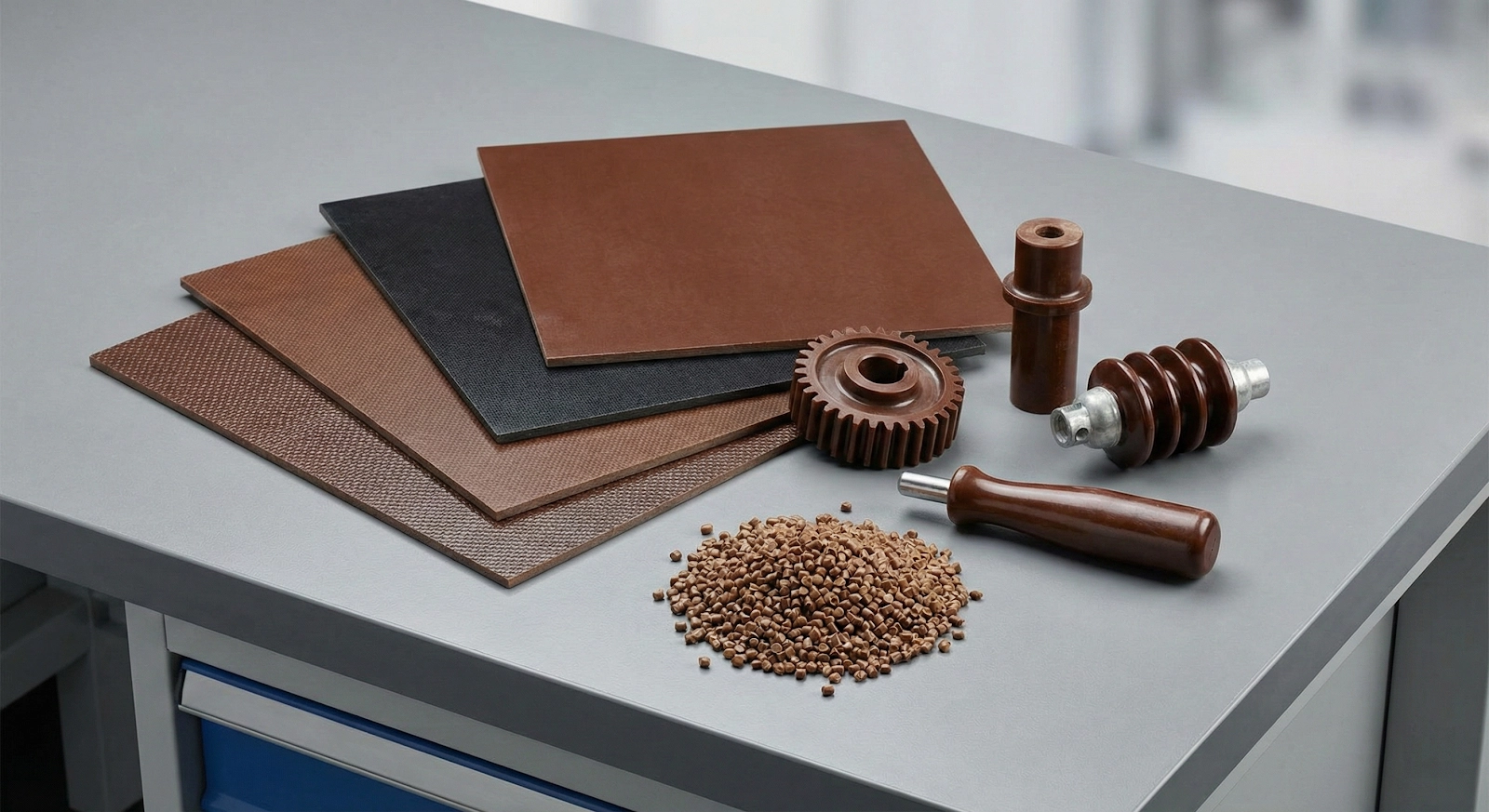
Phenolic resin is a thermosetting material and is irreversible. Once cured, it will not soften again when heated; instead, it may become brittle at high temperatures.
It offers excellent heat resistance (approximately 160–200°C), high hardness and rigidity, outstanding electrical insulation, and low water absorption.
Its surface is usually matte (non-reflective), with limited color options such as dark black or brown. It is relatively heavier, feels cooler to the touch, and produces a crisp, ceramic-like sound when tapped.
Post-processing often requires deflashing or polishing to remove sharp edges and improve hand feel. Given its rigid and thermosetting nature, specialized Phenolic Injection techniques are required to ensure optimal material density and prevent internal voids, which is a core manufacturing expertise that Intercraft provides.
Typical Applications for High-Performance Components
Phenolic resin (Bakelite): Commonly used for insulation and heat-resistant components such as switches, sockets, radio parts, motor components, and handles for cookware.Engineering plastics: Widely used across various industries, including consumer goods, packaging, and automotive components.
Identification Methods: How to Distinguish Between Materials
Sound and burning behavior: Phenolic resin produces a clear, crisp sound when tapped, similar to ceramic. When burned, it does not melt or drip; instead, it chars and becomes brittle, releasing a distinctive phenolic odor.Common engineering plastics such as nylon or PBT, on the other hand, will typically melt before burning.
Summary: Choosing a Reliable Total Solution Supplier

In general, phenolic resin (Bakelite) is preferred for industrial hardware that requires high insulation, high temperature resistance, and dimensional stability.Engineering plastics are more suitable when ease of processing, material diversity, and lightweight design are key considerations.
Precision Tolerances and International Standards
At Intercraft (ITC), the standard dimensional tolerance for our industrial hardware is typically set at ±0.50 mm (±0.02”). This represents our general standard; for customers in specific industries, tighter tolerances can be applied as required.All engineering plastics and phenolic materials used by Intercraft (ITC) comply with RoHS and REACH regulations, meeting safety and environmental requirements in most European, American, and Japanese markets.
Strict Quality Inspections for Heavy-Duty Operations
For threaded features that are critical to fastening performance, we strictly follow international standards such as UNC and UNF 2A/2B / GR & WR II. Intercraft (ITC) is equipped with certified inspection gauges to verify thread quality, ensuring safety and reliability during assembly. These strict quality inspections are integrated into every phase of our manufacturing process to guarantee that all high-performance components function flawlessly under heavy-duty operations.Integrated Supply Chain and Global Procurement
When selecting a key industrial hardware supplier, it is crucial to choose a company with ISO certification, proven credibility, extensive experience, and a commitment to sustainable operation.As regulations governing industrial hardware continue to become more stringent, working with an ISO-certified supplier that can fully trace and control the production process is increasingly important. This not only ensures compliance but also helps prevent product issues and potential safety risks. To overcome global procurement challenges, Intercraft acts not just as a manufacturer, but as a reliable partner offering a Total Solution—from initial design and engineering to final assembly. By leveraging our integrated supply chain, we effectively mitigate technical and communication risks for international buyers, delivering consistent, high-quality industrial hardware on time.
Frequently Asked Questions (FAQ)
Q1: How does Intercraft ensure the durability of industrial hardware in extreme environments?
A1: By thoroughly evaluating the specific operational stresses—such as UV exposure, extreme temperatures, or mechanical wear—we carefully select between advanced engineering plastics and thermosetting materials. Combined with our expertise in Phenolic Injection and precise Mold/Tooling Develop, we ensure every component is engineered for maximum longevity.Q2: Why is a Total Solution important for purchasing high-performance components?
A2: Sourcing custom industrial hardware often involves complex coordination between mold makers, injection facilities, and quality control teams. A true Total Solution streamlines this process through an integrated supply chain, reducing cross-border communication barriers and eliminating the risks associated with fragmented manufacturing.Ready to Enhance Your Industrial Equipment?
Partner with Intercraft (ITC) for a seamless Total Solution—from precision mold development to mass production. Let our engineering team help you overcome your toughest durability challenges and secure your supply chain
